
Blog Posts
Methamphetamine Addiction: Understanding Crystal Methamphetamine, Effects, Risks, and Treatment
Oct
Methamphetamine addiction, crystal methamphetamine
Crystal methamphetamine is a powerful synthetic stimulant that affects the central nervous system. It can increase alertness and energy while also placing significant stress on the brain and body. Methamphetamine may produce intense short-term effects, but repeated use can lead to dependence, serious health complications, and addiction.
Understanding crystal methamphetamine, its effects, and the risks associated with prolonged use is important for individuals, families, healthcare professionals, and communities working to prevent substance-related harm.
Understanding Methamphetamine Addiction
Methamphetamine addiction is a substance use disorder involving compulsive drug use despite harmful consequences. The condition can affect physical health, emotional well-being, relationships, employment, and financial stability.
Methamphetamine can influence the brain’s reward system, particularly pathways associated with dopamine. Repeated exposure may reinforce drug-seeking behavior and make it increasingly difficult for a person to stop using the substance without support.
Addiction is a treatable health condition. Early recognition and access to appropriate professional care can help individuals begin recovery.
Common Effects of Crystal Methamphetamine
The effects of crystal methamphetamine vary according to individual health, exposure, and frequency of use.
Short-Term Effects
Possible short-term effects include:
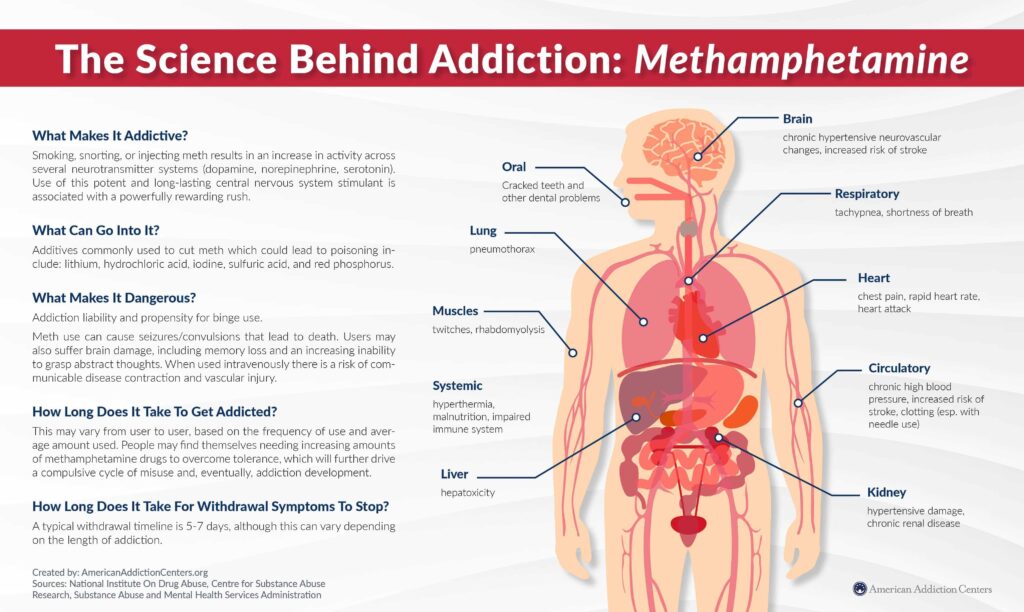
- Increased heart rate and blood pressure
- Reduced appetite and difficulty sleeping
- Anxiety, agitation, and restlessness
- Increased body temperature
- Rapid breathing
- Paranoia or confusion
Severe reactions may include seizures, stroke, heart problems, or dangerously elevated body temperature.
Long-Term Health Risks
Repeated methamphetamine use can contribute to serious physical and psychological complications, including:
- Cardiovascular problems
- Persistent sleep disturbances
- Memory and concentration difficulties
- Anxiety, depression, and paranoia
- Dental damage and other oral health problems
- Weight loss and nutritional deficiencies
- Increased risk of psychosis
The severity and duration of these effects differ between individuals. Medical evaluation is important when symptoms persist or worsen.
Signs and Symptoms of Methamphetamine Addiction
Recognizing the signs of methamphetamine addiction can help people seek assistance earlier.
Potential warning signs include:
- Strong cravings or repeated unsuccessful attempts to stop
- Neglecting work, education, or family responsibilities
- Continuing use despite physical or psychological harm
- Major changes in sleeping and eating patterns
- Increasing social isolation
- Financial or relationship difficulties associated with substance use
These signs do not establish a diagnosis on their own. A qualified healthcare professional can assess symptoms and recommend suitable care.
Methamphetamine Withdrawal and Recovery
When someone who has been using methamphetamine regularly stops, withdrawal symptoms may develop. These can include fatigue, increased sleep, low mood, anxiety, irritability, and intense cravings.
Some people also experience significant depression or suicidal thoughts during withdrawal. Anyone experiencing suicidal thoughts or a severe mental health crisis should seek immediate professional help.
A healthcare professional can assess withdrawal symptoms, address mental health concerns, and develop an appropriate recovery plan. Ongoing support can be especially valuable during the early stages of recovery.
Treatment Options for Methamphetamine Addiction
There is no single treatment approach that works for everyone. Evidence-based care may include:
Behavioral therapies: Approaches such as cognitive behavioral therapy can help individuals identify triggers, develop coping strategies, and change patterns associated with substance use.
Contingency management: Structured programs may use incentives to reinforce treatment participation and recovery-related behaviors.
Mental health support: Treatment for depression, anxiety, trauma, or other co-occurring conditions can be an important part of recovery.
Peer and family support: Support groups and appropriate family involvement may help reduce isolation and strengthen long-term recovery.
Continuing care: Regular follow-up, counseling, and recovery planning can help people manage cravings and respond to setbacks.
A healthcare professional can help determine which options are appropriate for an individual’s needs.
How Families Can Support Someone With Methamphetamine Addiction
Family members and friends can play a valuable role in encouraging treatment and recovery. Helpful steps include communicating without judgment, expressing concern clearly, learning about substance use disorders, and helping the person access professional services.
Avoiding confrontation during intoxication, maintaining personal boundaries, and seeking guidance from addiction specialists can also help protect everyone’s well-being.
Preventing Methamphetamine-Related Harm
Education, early intervention, access to healthcare, and community support are important components of prevention. Accurate information about crystal methamphetamine can help people recognize risks, challenge misinformation, and understand when professional assistance is needed.
People concerned about their own substance use or that of someone close to them should contact a qualified healthcare professional or local addiction service.
Conclusion
Methamphetamine addiction is a serious health concern, but treatment and recovery support are available. Understanding crystal methamphetamine, its short-term effects, long-term risks, withdrawal symptoms, and treatment options can help individuals and families make informed decisions.
Early intervention, evidence-based care, and continued support can help people work toward improved health and a more stable recovery.
Educational disclaimer: This article is intended for general informational purposes and does not replace professional medical advice, diagnosis, or treatment.